Call Us: (251) 721-1111 Email: jacob@lumeandco.io

The New Age Customer Journey
Why It’s More Like a Pinball Machine Than a Linear Path
Jacob Spotswood
8/27/20254 min read
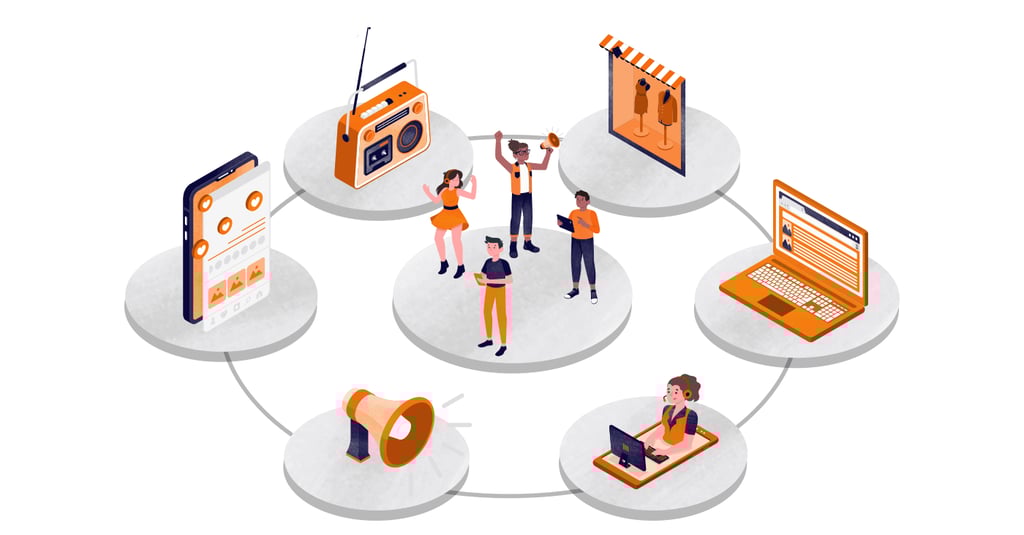
The way customers discover and decide to purchase from brands has changed dramatically in recent years. Gone are the days when a potential buyer would see a single ad, consider their options, and make a purchase in a clean, predictable sequence. Instead, the modern customer journey is messy, dynamic, and full of unexpected turns, more like a pinball machine than a straight track.
This shift has massive implications for businesses and their marketing strategies. It’s no longer enough to rely on a single channel or one-off campaign. To build trust and convert today’s consumers, brands must show up consistently across multiple platforms, creating a web of touch points that guide potential customers toward making a decision.
From Linear Funnels to Multi-Touchpoint Journeys
For decades, marketers built campaigns around the classic funnel model: awareness, consideration, decision, purchase. Each stage flowed neatly into the next, with predictable conversion rates and relatively simple attribution models. But the digital age has disrupted this linear approach.
Today, a customer might first hear about your brand through a podcast ad during their commute. Later, they might see an Instagram Reel featuring your product or a TikTok video breaking down its benefits. A week later, they might stumble across a YouTube review, check out your website, and finally be retargeted with a Facebook or LinkedIn ad that prompts them to buy.
In this new reality, no single touch point is solely responsible for converting a customer. Instead, it’s the collective impact of multiple exposures, spread across different channels, that creates familiarity, builds trust, and eventually drives action. This concept is known as a multi-touchpoint customer journey, and it has become the backbone of modern marketing.
Why Trust Is Built Over Multiple Channels
One of the biggest reasons the customer journey now looks like a pinball machine is trust, or more accurately, the amount of trust required before someone feels confident making a purchase.
In a world where consumers are constantly bombarded with ads and brand messages, skepticism is high. People are less likely to convert after a single interaction, no matter how compelling the offer. Instead, they need to see a brand multiple times, in different contexts, to feel confident that it’s legitimate, credible, and worth their money.
Research suggests that most consumers need 7 to 10 brand touch points before making a purchasing decision. This means that the first ad or piece of content they see isn’t about closing a sale, it’s about sparking awareness. The second, third, and fourth are about reinforcing that awareness and slowly building trust. By the time the final nudge comes, whether through an email, a retargeting ad, or a social post, the customer feels ready to commit.
The Role of Omnichannel Marketing
This new pinball-style journey makes omnichannel marketing essential. Instead of relying on a single platform, businesses must create a cohesive brand presence across multiple channels where their audience already spends time. For example, a brand might combine:
Social Media Marketing: Platforms like Instagram, TikTok, LinkedIn, and Facebook offer unique ways to connect with potential customers through organic posts, ads, and influencer collaborations.
YouTube Content & Video Ads: Video builds authority and trust, making it one of the most powerful tools for educating and persuading audiences.
Audio Advertising: Podcast and streaming ads provide a captive, engaged audience and can help reinforce brand messaging in a personal way.
Traditional Media & Commercials: While digital dominates, TV and radio still hold value, especially when integrated into a digital-first strategy.
The key is consistency. Customers should experience a seamless brand narrative across all these touch points, with messaging that reinforces your value at every step.
Where to Focus: Quality Over Quantity
While omnichannel marketing is powerful, it doesn’t mean you need to be everywhere at once. Spreading yourself too thin can lead to inconsistent content and wasted ad spend. Instead, focus on the platforms where your ideal customers spend the most time.
For instance, a B2B company might see stronger results on LinkedIn and YouTube, where decision-makers research solutions. A direct-to-consumer lifestyle brand might thrive on Instagram, TikTok, and Pinterest, where visual storytelling drives engagement. By identifying the right platforms and investing in high-quality content for each, you’ll create a more effective and sustainable strategy.
Why the Pinball Machine Approach Works
The pinball analogy captures the reality of modern marketing because it reflects how people actually shop. Rarely does someone see a single ad and immediately make a purchase. Instead, they bounce between platforms, channels, and content formats, sometimes for days or weeks, before finally deciding to buy.
Each of these touch points serves as a small nudge forward. One introduces your brand. Another reinforces your credibility. A third answers an objection or provides social proof. Together, these interactions create momentum until the customer feels ready to make a purchase.
By embracing this reality, businesses can stop chasing one-and-done conversions and start focusing on building long-term trust. The brands that win today are those that show up consistently, provide value across every interaction, and create a connected experience from first impression to final purchase.
Conclusion
The new age customer journey is unpredictable, nonlinear, and built on trust formed across multiple touch points. It’s no longer a straight path, it’s a pinball machine where customers bounce between channels before landing on a purchase decision.
To thrive in this environment, businesses must embrace an omnichannel approach, focus on the right platforms for their audience, and deliver consistent, high-quality content that builds familiarity at every stage. By doing so, they not only improve their chances of conversion but also position themselves as trustworthy brands that customers return to again and again.
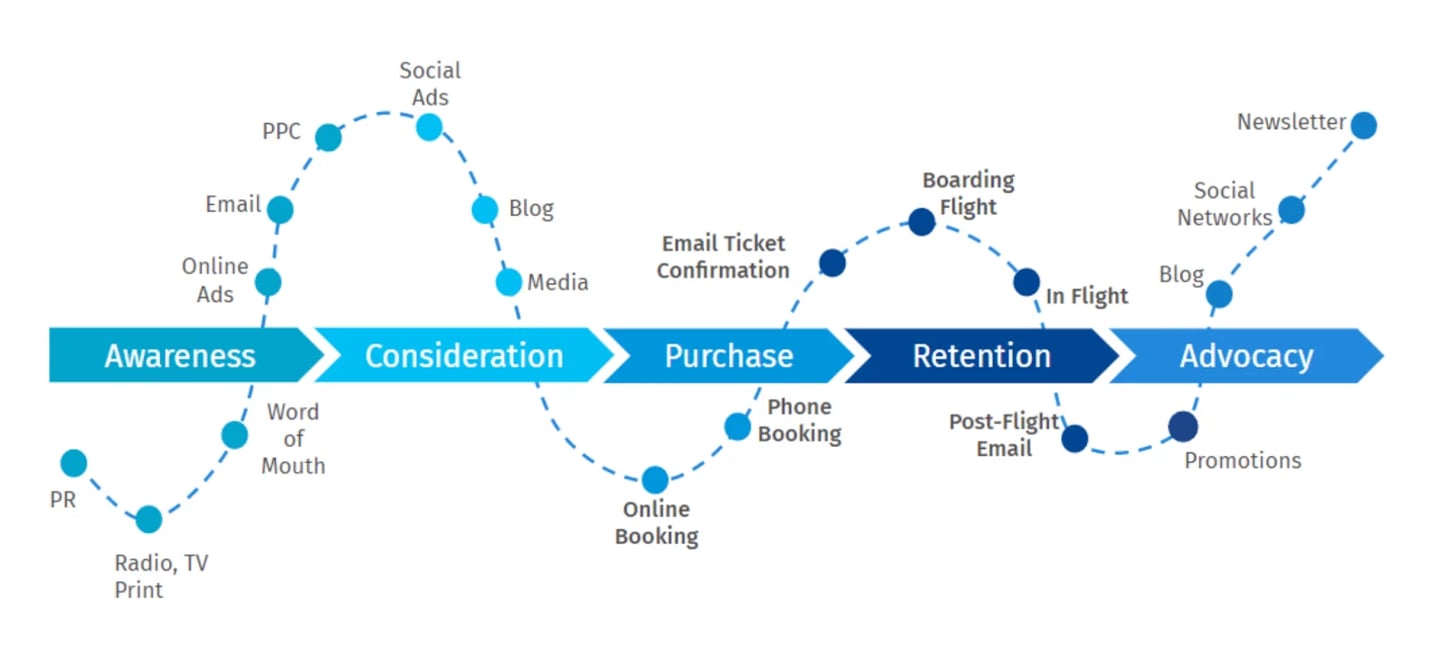
Example: Airline Customer Journey